SOUND ISN'T THE SOUNDTRACK. IT'S HALF THE STORY.
We sat down with Antoine Cotton, founder of Around The Clock Productions, to talk about why sound and visual storytelling can't be sequenced — they have to start in the same room.
The disciplines that get separated too early
Most production timelines treat sound as something that happens after the picture is locked. Visuals get developed, storyboarded, shot, and edited — and only then does someone ask what it should sound like. By that point, sound is doing cleanup work: covering gaps, propping up a cut that isn't quite landing, adding polish rather than meaning. It's treated as a layer, not a discipline. That's backwards. Sound and image aren't sequential parts of a production — they're two inputs into the same idea. A shot only means what it means because of the sound underneath it. Take the sound away from any piece of branded content you remember and it stops being memorable. That's not a coincidence.
A conversation worth having
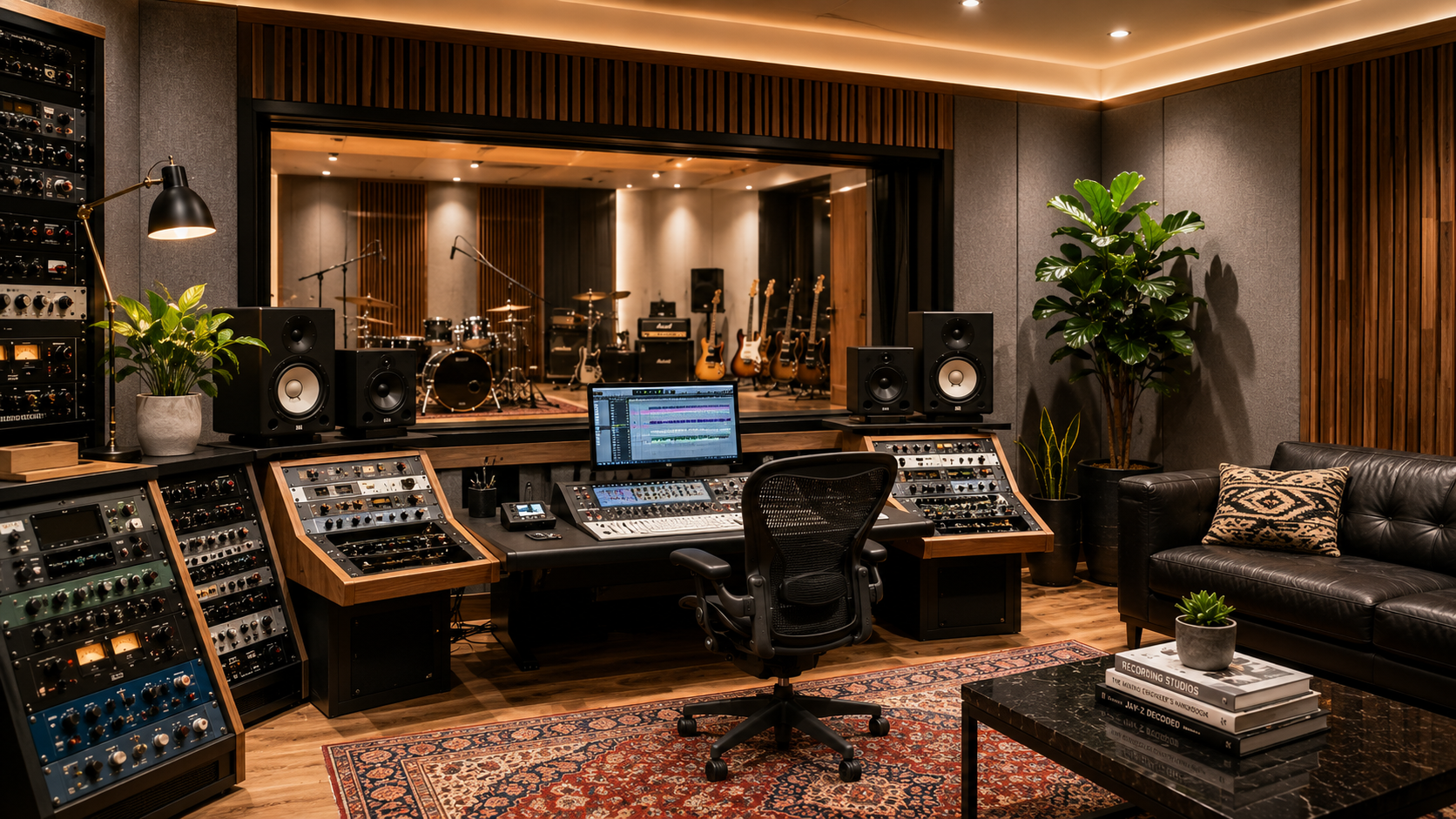
We recently sat down with Antoine Cotton, founder and producer of Around The Clock Productions — a London studio building bespoke music, sound design, and audio production for film, TV, advertising, and brands, with credits across Premier League broadcast, Swarovski, and CUPRA, among others. What came out of that conversation wasn't really about audio production techniques. It was about sequencing — where sound sits in the creative process, and how early it needs to be in the room to actually do its job. Antoine's view, which mirrors how we think about visual storytelling at Mad Bad, is that bespoke sound only works when it's developed alongside the narrative, not applied to it afterwards. Stock music and library sound effects are available to everyone — which means the same track can turn up in your campaign and a competitor's the following month. Built-for-purpose sound, like built-for-purpose visuals, is the only kind that's actually yours.
Brand salience is a sensory problem, not a visual one
Brand salience — the quality that makes a brand come to mind unprompted, in the moments that matter — doesn't live in a logo or a colour palette alone. It lives in the whole sensory signature: the visual language, yes, but also the sonic one. The cadence of a voiceover. The texture of a soundscape. The silence before a cut. Brands with real salience are recognisable with the picture turned off. That's the argument for treating sound and visual storytelling as one discipline with two toolkits, not two departments that hand off to each other. When they're built together from the brief stage, they reinforce the same idea from two directions. When they're bolted together at the end, the audience feels the seam even if they can't name it.
What this looks like in practice
Practically, it means sound isn't a line item you add in post — it's a conversation that happens at the same table as the creative concept, the shot list, and the edit structure. It means asking what something should sound like at the same moment you're asking what it should look like. It means bringing in a specialist like Antoine early enough that the sound can shape decisions, not just support them. This is the same principle we apply to every discipline at Mad Bad: craft, considered from the start, by people who specialise in it — not generalists doing their best across every channel. Visual storytelling and sound design are different crafts. They deserve to be treated that way, and they deserve to be in the same room from day one.
Where this goes next
Conversations like this one are exactly why we keep building relationships across disciplines — production partners who go deep in a single craft, rather than trying to cover everything at a shallower level ourselves. If you're developing content where sound needs to carry real weight, not just fill space, we'd like to be part of that conversation, and we'd recommend Antoine and the Around The Clock team for the same reason.
Want to talk it through?